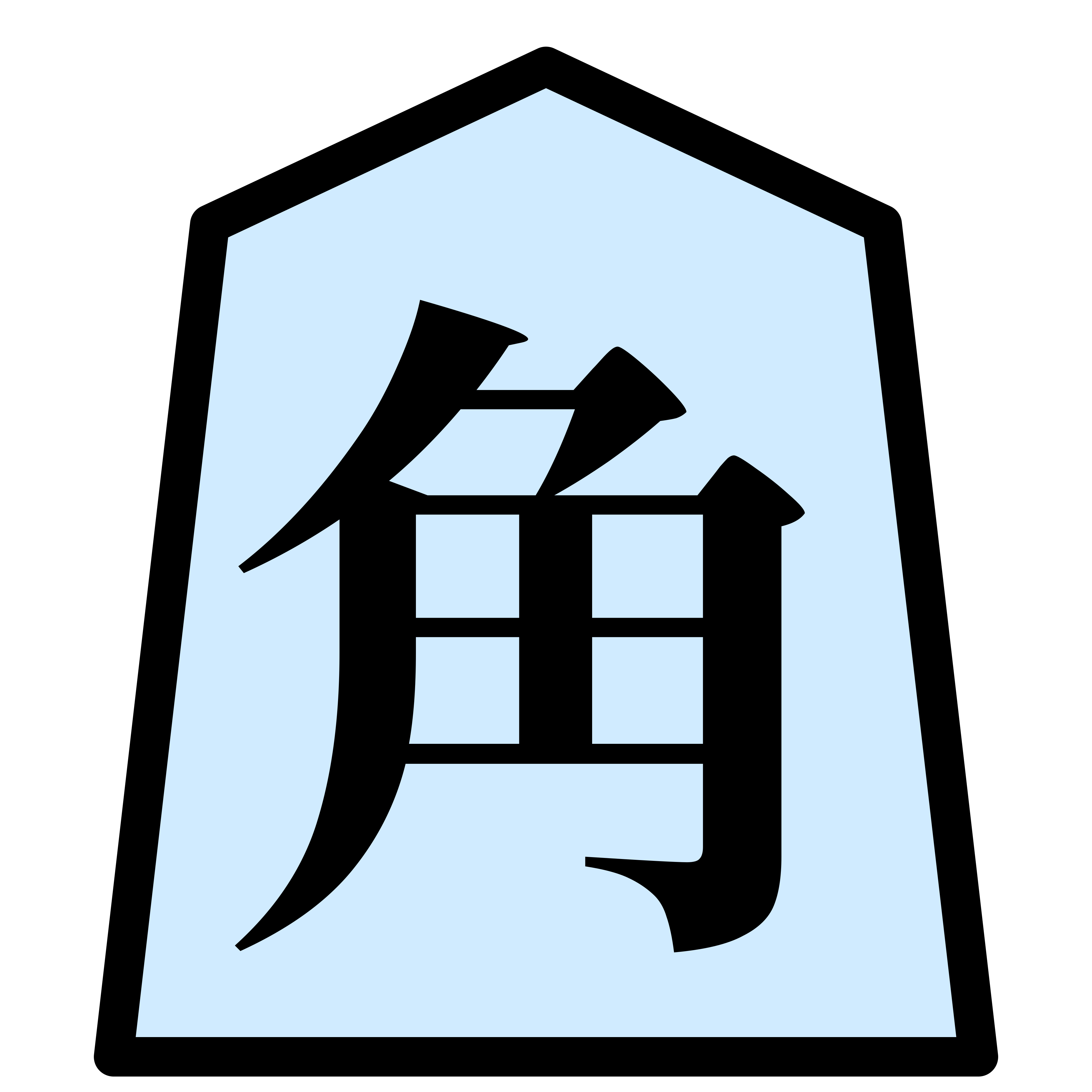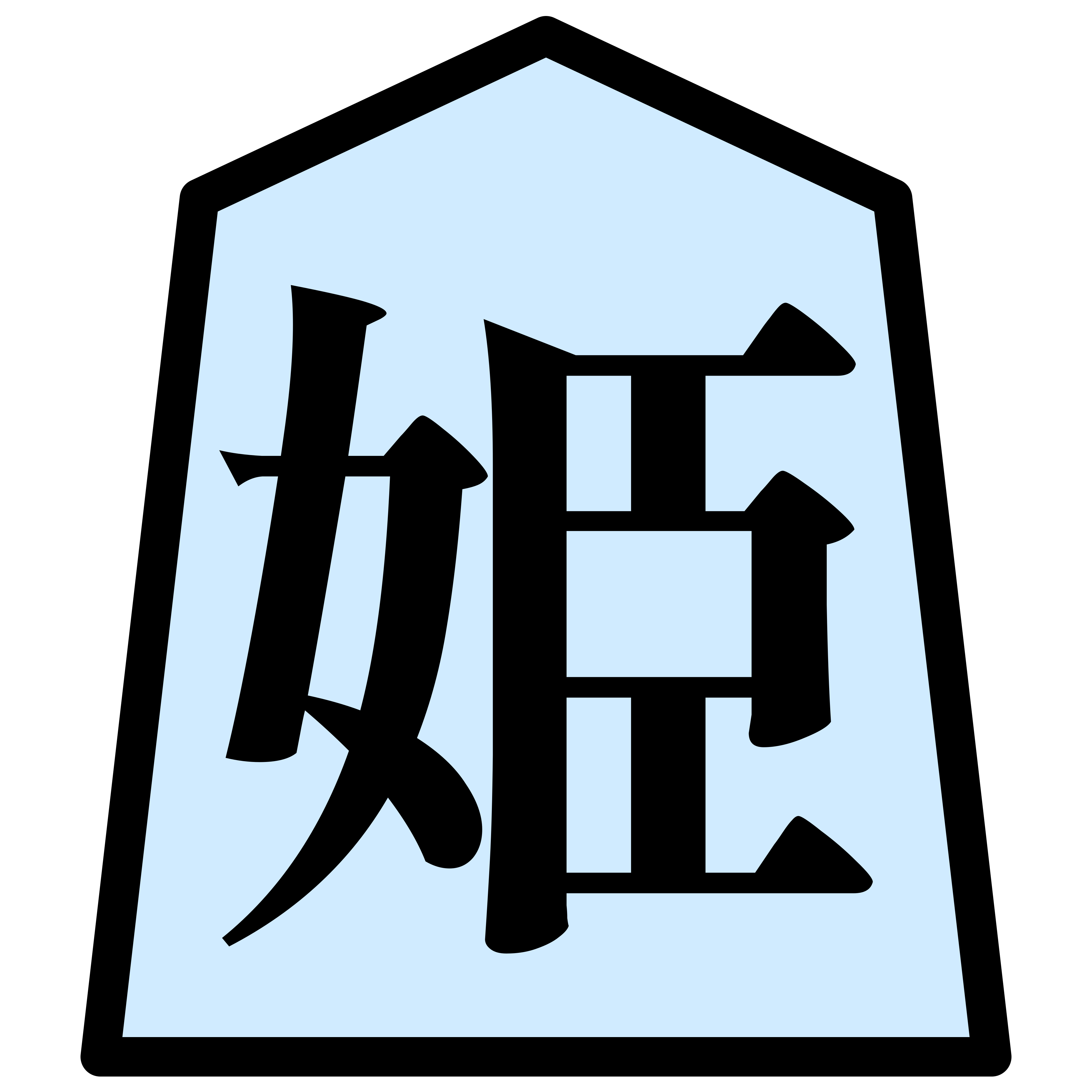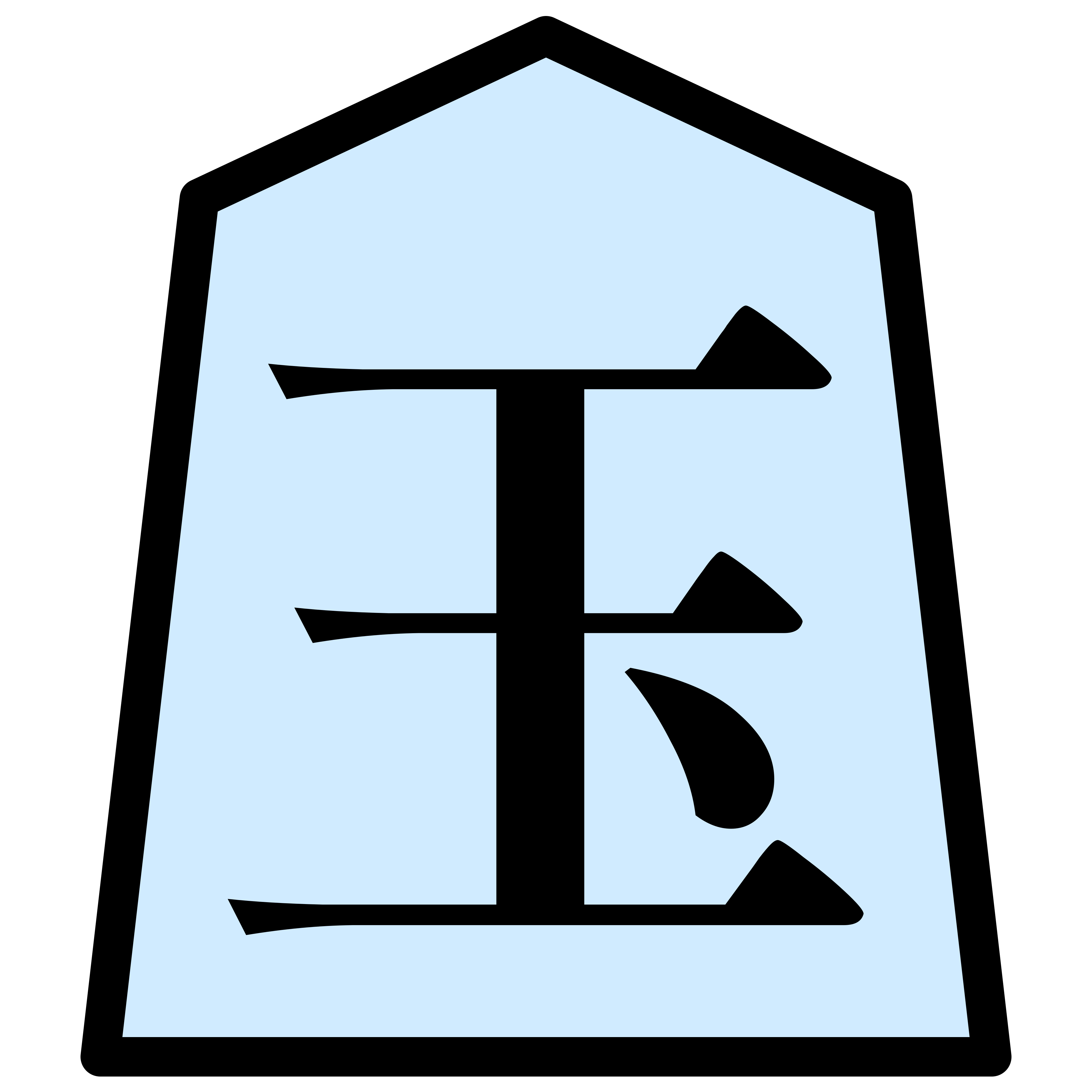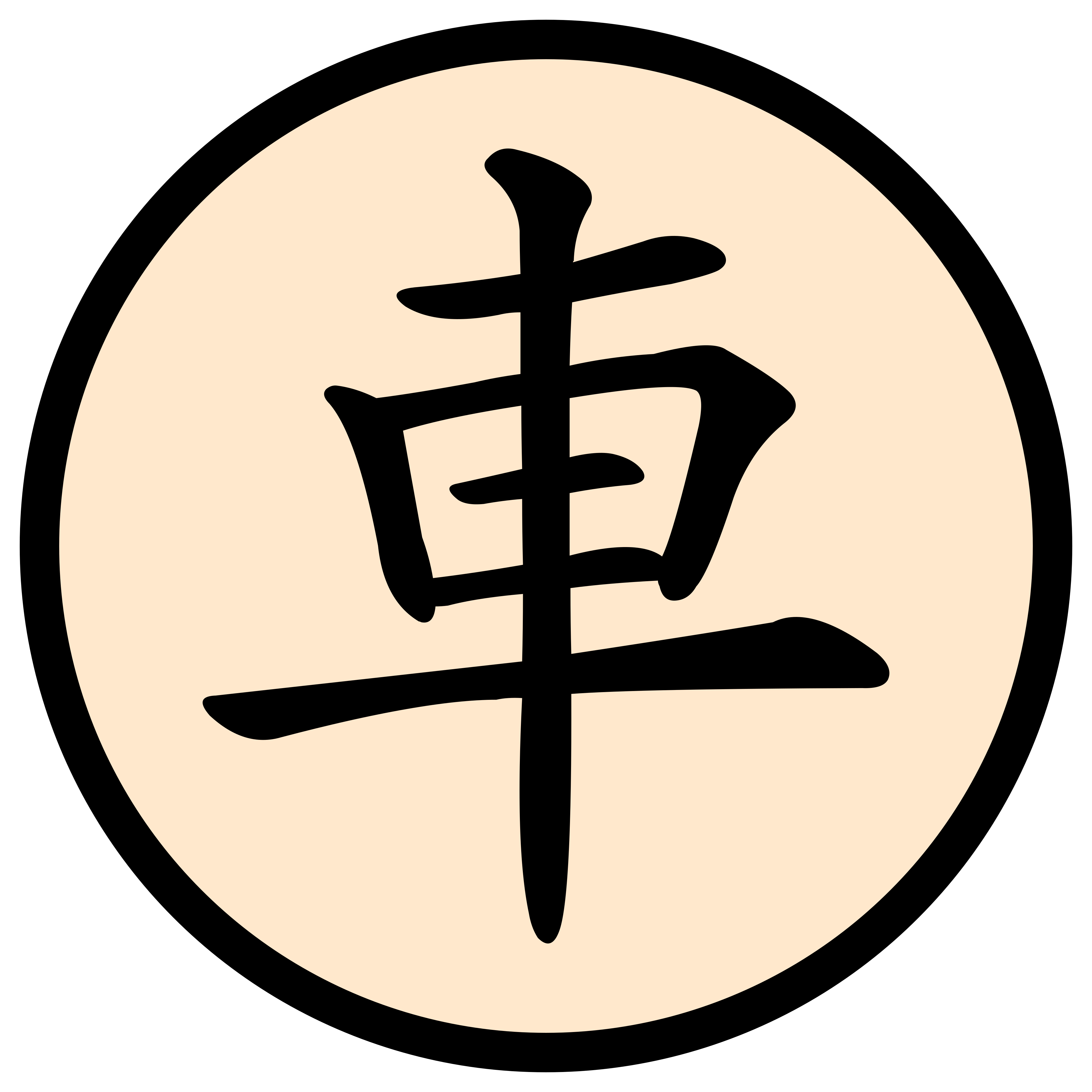
Sanki logo Sanki

Chess · Ōgi · Xiongqi

Three chess traditions, one board — and they play each other.

Nine pairings on a shared 8×8 board, each side under its own rules. In your browser. No account.

Play now

Free. A key is made in your browser — nothing to sign up for.

Styles

Chess

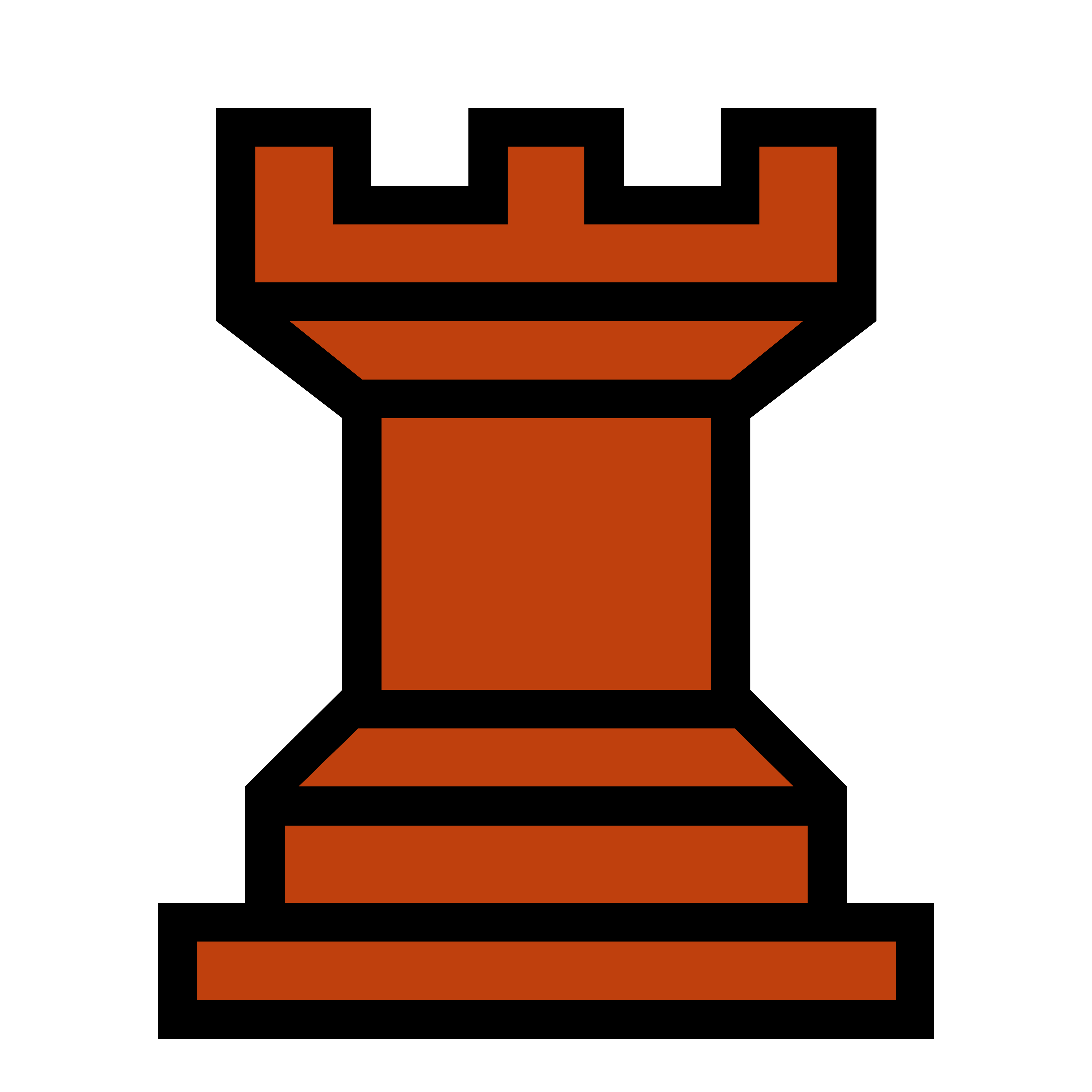
Long-range pieces on an open board, a castling king, and a pawn that may become anything.

Descended from chaturanga by way of Persia and Europe, chess is the game of two armies in the open: bishops and rooks that sweep the board, a queen that does both, and a pawn whose whole life is the march to the last rank.
Learn more

Chess, the initial position.

The crossings

Each army keeps its rules. The board is where they meet.

Not a house variant per pairing: one formal system carries all three traditions. Then things happen that no single tradition has ever had to answer.

An ōgi Bishop takes the chess Queen: she enters the hand as a Fu, and comes back as one — with check.

The Queen comes back as a Fu.

Anything an ōgi piece captures goes into its hand — and a foreign piece enters it as a Fu. Take the chess Queen and she returns to the board as a foot soldier, dropped wherever the ōgi player likes.

Chess Ōgi

With the General on the f-file the King has three squares and no castling; a Knight blocks the file, and White castles.

A General, far away, forbids the castling.

Along an open file, the xiongqi General attacks at a Chariot’s range. A chess king may not castle through a square that is attacked — even from the far end of the board.

Chess Xiongqi

A Fu double-steps past a xiongqi Soldier; the Soldier steps sideways onto the skipped square and takes it en passant.

A Soldier takes a Fu sideways.

Past the river, the xiongqi Soldier steps sideways. Against a Fu that has just double-stepped, that quiet step can capture en passant — removing a piece on a square the Soldier never touches.

Ōgi Xiongqi

Nine pairings, mirrors included. Sides and variants are negotiated between players — you never sit at an asymmetric pairing unknowingly.

In motion

Some rules are quicker to watch than to read.

A clip is a real position and real moves, played on the board itself — checked by the rule system before it is shown, like every move on Sanki.

The General captures like a Chariot: five squares up an open file, in one move.

The General’s reach

At home, the xiongqi General steps one square at a time. But along an open file or rank it attacks at a Chariot’s range: here it takes a Soldier five squares away, in one move. A chess king facing it across an open file learns this the hard way.

Xiongqi

A piece from the hand lands on any empty square — here a Knight, dropped into a fork.

The drop

Instead of moving, an ōgi player may take a piece from hand and put it on any empty square. A Knight held in reserve lands on c7 — a fork on the King and the Rook, out of nowhere.

Ōgi

Both camps castle: White short, Gote long — the King steps two files, the Rook jumps over.

Castling, in every camp

All three traditions castle exactly as chess does: the King steps two files toward a Rook that has not moved, and the Rook jumps over it. Here White castles short, and Gote, playing ōgi, answers with the long castle — one move each, two pieces each. The xiongqi General and Chariot follow the same rule.

ChessŌgi

On the last rank a Soldier promotes by choice — Chariot, Knight, Bear or, here, Empress.

The Soldier’s promotion

A xiongqi Soldier that ends a forward move on the last rank must promote — and the player chooses what it becomes: Chariot, Knight, Bear or Empress. Never a Queen, since there is none; most choose the Empress.

Xiongqi

Moods

Say how a move feels — and find it again wherever the move returns.

Tag a move with one of four moods. A mood belongs to the move and the position it makes, not to the game: tag it once, and it follows that move wherever it recurs, in anyone’s game.

A Knight lands on e7: check on the King, the Queen in its reach. Tagged tactical.

Tactical

Sharp, combinative play.

The Latvian Gambit: after 1. e4 e5 2. Nf3, Black plays 2… f5 and offers the pawn. Tagged romantic.

Romantic

Bold, sacrificial, attacking play.

A Soldier steps up beside the other: the centre held, before the river. Tagged classical.

Classical

Principled, central, positional play.

Red opens with the Knight, g1–f3, before a single Soldier: the centre eyed from the flank. Tagged hypermodern.

Hypermodern

Flank-based control of the centre, from a distance.

The four names come from the historiography of Western chess; Sanki takes them as archetypes for all three traditions. Yours alone to set, and to change.

Premoves

Play while the other side thinks — instantly.

Queue your next move during the opponent’s turn. It is signed and published at once, like any move, and it plays the instant the reply lands.

White plays b3, then queues the Bishop to b2 while Gote thinks; Gote pushes a Fu, and the Bishop’s move fires at once.

Legality

If your premove is legal when your turn arrives, it plays automatically. If it becomes illegal (because your opponent played a different move), it is canceled.

White checks, then queues two Rook moves while Black thinks; each fires the instant the King has moved — the second one is mate.

Timing

Each executed premove costs 0 seconds from your clock.

  • A premove is signed and published like any move, the moment you make it. A sharp opponent may read it.
  • Off by default — a move firing on its own can be surprising. Switch it on in Preferences › Premoves.

Accessibility & customisation

The same board, read the way you want, by everyone.

Eastern or Western

Keep the kanji and hanzi — or draw every ōgi and xiongqi piece as a Latin figurine, so a chess player reads the army across the board at a glance. Chess only ships Western art.

Xiongqi against ōgi, the initial position — in the art you choose.

Your colour on your pieces

Pieces can wear each player’s profile colour — or keep their traditional colours. Nineteen palettes; yours tints the whole app.

Chess against ōgi, the initial position — in the colours you choose.

Light, dark, or system

Light, dark, or your system’s choice — and every board and sketch on this page is drawn in your own palette.

For everyone

The board is a grid: playable by keyboard, read by screen readers. Five languages. Move sounds, a different timbre per tradition. Install it — an icon, a full-height board.

Privacy

Nothing watches you play.

  • No trackers, no analytics, no third-party scripts. Fonts are served from here.
  • One cookie — it remembers your language, if you choose one.
  • No account database: nothing to leak, nothing to reset, no list to sell. Your key is made in your browser and stays there, protected by a passphrase if you choose.
  • Even avatars are your call. Showing a player’s real picture means fetching it from a server they chose — which tells them you looked. So you choose: nobody, the people you follow, or everyone. Until then, everyone wears an avatar Sanki generates from their key.
  • Blocking is private and follows your key. Reporting is public and signed. They are deliberately different.

Privacy policy

Problems

Problems in every pairing. Compose your own.

Three problems, three pairings. Each rests unsolved until you ask — then its solution plays, checked by the rules like every move on Sanki.

  • Every problem is published with its composer’s own solution, and checked to force the stipulation before anyone sees it.
  • The composer refuses a broken position before you publish — thirty-two pieces, one royal a side, not already over.
  • A star on a problem is public, permanent, and names its composer.

Open the composer

Three Royals, One Realm

The board is set.

Pick an army — any of the three — and meet another. No sign-up, no e-mail, no password.

Play now

Already on Nostr? Sign in with your extension or bunker from the account menu.

Couldn't start a game